
A business transaction does not end when a sale is made. Behind every purchase is a series of connected steps, from recording the sale to creating an invoice, keeping transaction records, and updating the books.
When these pieces work together, businesses can have a clearer view of their transactions and financial activities.
This is where E-Invoicing can become part of a more connected business workflow.
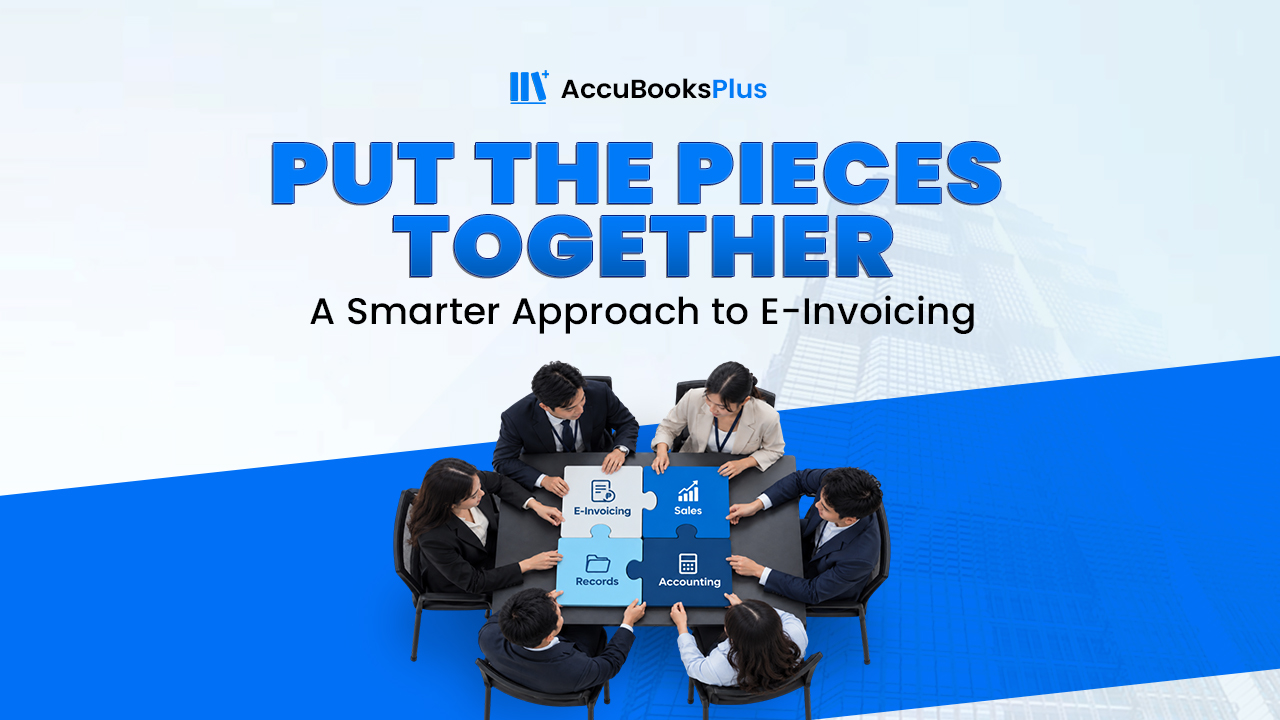
Think of it like putting together a puzzle. Each piece has its own role, but the complete picture only becomes clear when they fit together.
Piece 1: Sales
Every transaction starts with a sale.
Whether a customer purchases a product or pays for a service, the sale creates important information that the business needs to record and manage.
Details such as the items or services sold, quantities, prices, and transaction amounts become part of the business's records.
Keeping this information organized is important, especially when the number of transactions increases.
Piece 2: E-Invoicing
Once a sale takes place, an invoice provides a record of the transaction and the amount being charged to the customer.
With E-Invoicing, this information can be managed electronically as part of the business's digital workflow.
Instead of treating the invoice as an isolated document, businesses can view it as one part of the larger transaction process.
Sales create the transaction. E-Invoicing documents it.
Piece 3: Records
Every transaction leaves information behind.
Invoices, sales details, payment information, and other transaction data can become important business records. Keeping these records organized makes it easier to review past transactions and find information when it is needed.
Digital records can also make it easier to trace a transaction back to its source.
For example, a business can look at an invoice and connect it back to the corresponding sale and transaction details.
Piece 4: Accounting
The final piece connects the transaction to the business's financial records.
Sales and invoices contain information that can contribute to accounting activities. When these pieces are properly connected, businesses can have a clearer view of their financial transactions.
Instead of looking at sales, invoices, and accounting records as completely separate activities, businesses can manage them as connected parts of the same workflow.
Putting the Pieces Together
The real value comes from how these four pieces work together:
SALES → E-INVOICING → RECORDS → ACCOUNTING
A sale creates a transaction.
An E-Invoice documents it.
The information becomes part of the business records.
The transaction contributes to the accounting process.
When these steps are connected, businesses can have a clearer transaction trail and a more organized way of managing their information.
Why a Connected Workflow Matters
As a business grows, the number of transactions it handles can grow with it. Managing each piece separately can make it harder to keep information consistent and easy to trace.
A connected workflow can help businesses see how different activities relate to one another.
This can make it easier to review transactions, maintain records, and understand how day-to-day sales activity contributes to the bigger financial picture.
Putting It Together with AccuBooks Plus
AccuBooks Plus brings accounting and related business processes together in one digital platform.
With E-Invoicing as part of the workflow, businesses can manage invoice information alongside their sales and accounting activities.
This gives businesses a more connected way to handle transaction information instead of treating each step as a separate task.
The goal is not simply to create an electronic invoice. It is to make the different pieces of a business transaction work better together.
Complete the Picture
A successful transaction involves more than a sale. It creates information that moves through different parts of the business.
By connecting Sales, E-Invoicing, Records, and Accounting, businesses can build a clearer picture of their transactions and keep important information organized.
Put the pieces together. Keep your transactions connected with AccuBooks Plus.
Frequently Asked Questions
1. How are sales, E-Invoicing, records, and accounting connected? - A sale creates the transaction, E-Invoicing documents it, the information becomes part of the business records, and the transaction contributes to the accounting process.
2. Why is it important to connect these processes? - Connecting these processes can help businesses maintain a clearer transaction trail and make related information easier to review and manage.
3. How does AccuBooks Plus support a connected workflow? - AccuBooks Plus brings accounting and related business processes together in one platform, helping businesses manage transaction and invoice information as part of their overall accounting workflow.
Leave a comment